
Streetwalking Vienna
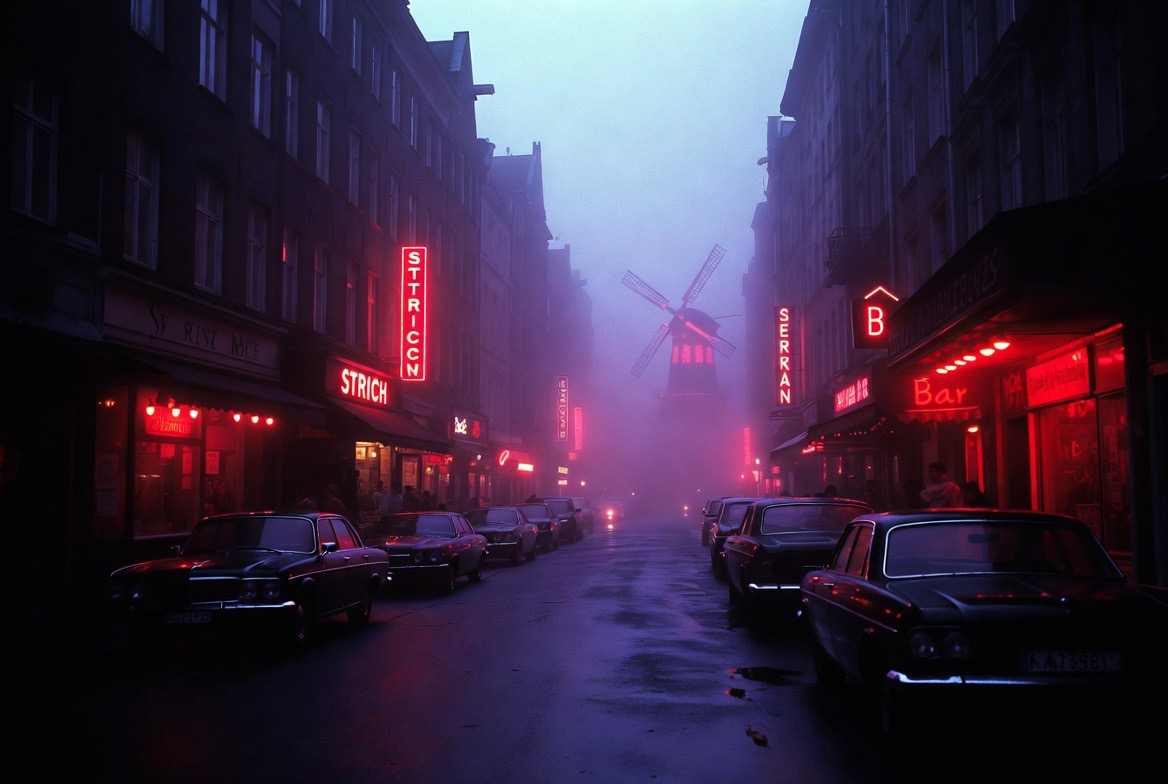
From the Prater to the industrial area: Vienna's changing streets - and the most legendary red light districts in Europe
Just imagine: Neon lights flickering, cars slowly creeping past and women waiting at the side of the road for customers. This used to be part of everyday life in Vienna on the Gürtel, in the Stuwerviertel or in the Prater. Today? Displaced to the outskirts of the city in dreary industrial zones like Brunnerstraße. Vienna's street prostitution tells a story of glamor, decay and displacement - and stands in stark contrast to the great European icons such as Amsterdam's De Wallen or Hamburg's Reeperbahn.
Vienna's street prostitution: from "wild" belt to suburban exile
In the 1990s and 2000s, the Vienna Gürtel was still the city's red light district. Together with the Stuwerviertel (2nd district) and parts of the Praters, it was one of the best-known hotspots for street prostitution in Austria. Hundreds of women - many from Eastern Europe after reunification - stood here, offering their services, often in the immediate vicinity of cheap hotels by the hour. The Gürtel was loud, rough and legendary: a mix of bars, brothels and street prostitution that bothered local residents but also attracted regular customers.
Reports from this period describe a milieu with its own (crumbling) code of honor, pimping structures and conflicts. For decades, the Gürtel was considered Vienna's "brothel mile".
With the stricter regulations of recent years came the end of this era. Street prostitution was largely pushed out of the central and residential areas.
Current situation (as of 2025/2026): Streetwalking is concentrated in industrial areas:
- Brunnerstraße (23rd district, Liesing/Atzgersdorf)
- Autokaderstraße / Einzingergasse (21st district, Floridsdorf)
There are usually 20-50 women there, many commuters from Eastern Europe. The scene is manageable, but there are still debates about illegal activities and neighborhood problems.
Displacement has shifted the problem - indoor prostitution in brothels now dominates.
Official information: wien.gv.at - Prostitution in Vienna
Europe's most sinful miles: The great contrasts
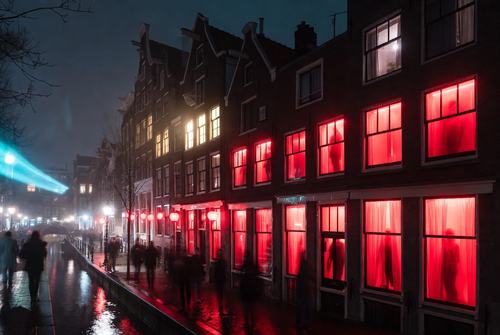
De Wallen (Amsterdam) - The showcase of Europe
De Wallen, also known as "Rosse Burt", is the best known and oldest red light district in Europe. Prostitution has existed here since the 14th century - originally for sailors in the harbor district. The narrow alleyways around the Oude Kerk are lined with around 300 window cabins with red neon lights where women offer their services. It is highly regulated: sex workers are self-employed, pay taxes and rent the windows legally.
In addition to prostitution, there are sex stores, peep shows, sex museums and coffee shops. During the day, the district appears almost normal with streams of tourists, at night it pulsates. However, Amsterdam has been struggling with mass tourism and congestion in recent years - there are plans to relocate parts of it or restrict access more at night (bars close at 2am, brothels at 3am). De Wallen remains a mix of historical romance, open sexuality and commercial tourism. Many visitors come not just for sex, but for the unique atmosphere of the canals and medieval buildings.
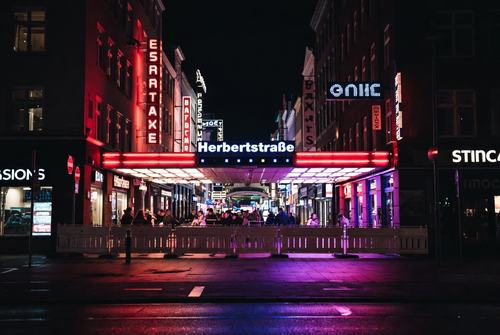
Reeperbahn & Herbertstraße (Hamburg) - The rough, "most sinful mile"
The Reeperbahn in St. Pauli is probably the most famous party mile in Germany - loud, garish and unadorned. Formerly a port district for sailors, it became famous in the 1960s/70s thanks to the Beatles and remained a center for sex tourism. Today, bars, clubs, musical theaters and sex stores mingle with the red light.
The Herbertstraße is the highlight (or low point): An alley only about 100 meters long, at the ends of which there have been privacy walls since 1933. Women sit in windows or on stools, often in boots ("boot women"), and address passers-by. Entry is officially forbidden for women and young people under 18 - a relic from earlier times. Up to 250 women used to work here, today it is more expensive and a little quieter, but remains tough and direct. The Reeperbahn has partly transformed into a trendy district, but the rough charm and rumors of crime persist. It's rougher than Amsterdam - less touristy and slick, more authentic and tough.
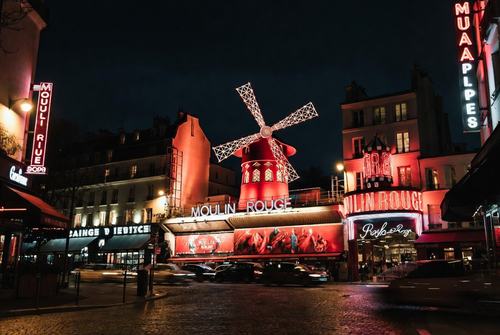
Pigalle (Paris) - Romantic and wicked with Moulin Rouge charm
Around the Place Pigalle and the iconic Moulin Rouge with its red windmill lies Pigalle - once the wild heart of Parisian nightlife. In the 19th and 20th centuries, cabarets, brothels and street prostitution shaped its reputation as a den of iniquity. Today, the district has changed dramatically: Many sex stores and peep shows have given way to gentrification and hipster bars. There are trendy restaurants, cocktail bars and cultural venues.
Nevertheless, some red light remains: neon signs, a few clubs and some street activity. Pigalle has a more stylish and French-romantic feel - fewer windows, more cabaret tradition. The mixture of old disrepute and new trend makes it special: almost bourgeois during the day, lively in the evening. Many Parisians see the change in a positive light (more security, less harassment), others regret the loss of the authentic "sinful" flair. It is probably the most "civilized" of the large districts.
More hard contrasts:
- Kurfürstenstraße (Berlin): Often known as a problematic street prostitution street with poverty prostitution - visible and rough.
- Dubí (Czech Republic): The "longest street prostitute in Europe" along the E55 near the German border - cheap, hard and borderline.
- Bahnhofsviertel Frankfurt: Formerly extremely disreputable, today multicultural with Eros centers (e.g. the large "Red House"), but also gentrification and trendy bars. It remains a contrast of financial metropolis and red light.
In comparison, Vienna seems restrictive and decentralized - no glamour tourism, but pragmatic relocation.
Why the change? Displacement and everyday reality
Prostitution is the oldest trade - and remains controversial. The belt of the old days embodied the unbridled, visible side; today, much has shifted to the periphery. Shady sides such as exploitation and the East-West divide remain the same everywhere.
Advice centers:
Conclusion: Between nostalgia and modernity
Vienna's Gürtel was once the pulsating, wicked heartbeat of street prostitution - loud, lively and problematic. Today it is history, relegated to the end of the city. Compared to the rest of Europe, Vienna seems unremarkable. Prostitution will always exist. The question remains: How open, safe and humane do we want to make it?
Note: This post is for information and entertainment purposes. No incitement to illegal or disrespectful acts. Respect the dignity of all involved. For serious information: wien.gv.at or the advice centers mentioned.
What do you think? Do you know the old Gürtel period or one of the European neighborhoods? Write in the comments!
(Sources: Official Vienna pages, ORF, DiePresse, Wiener Zeitung, Wikipedia and other reports. The situation is changing - check current developments)

Autor
Hannes Obermoser