
Is the Nordic model coming?
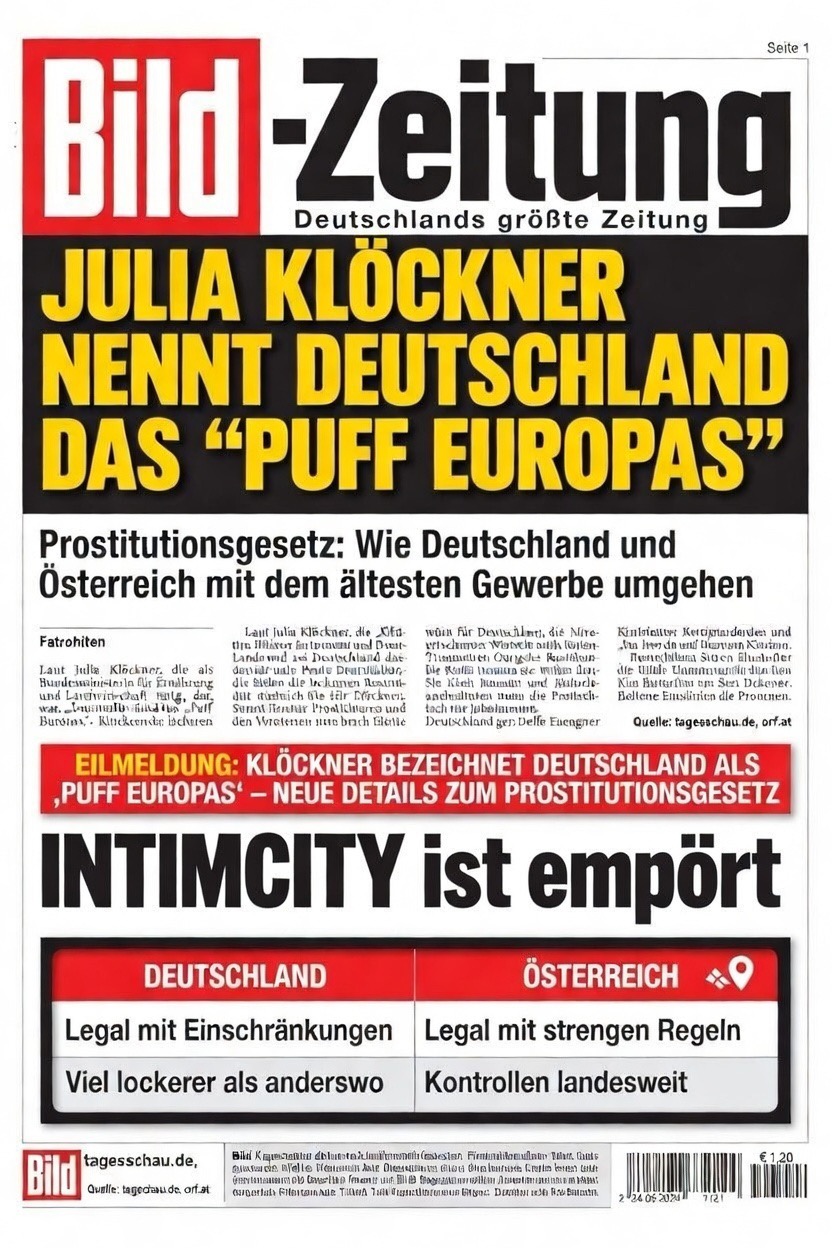
On November 4, 2025, Bundestag President Julia Klöckner (CDU) made a clear statement at the "Heroine Award" ceremony in Berlin:
Germany is the "puff of Europe" and must finally ban prostitution - at least the purchase of sexual services. In her speech, she harshly criticized the current legal situation: neither the Prostitution Act of 2002 nor the Prostitute Protection Act of 2017 provide sufficient protection for those affected. Instead, assaults, power imbalances and involuntary situations would continue to exist.
Klöckner advocates the Nordic Model (also known as the Equality Model), which has been in place in Sweden since 1999 and was later adopted by Norway, Iceland, France, Ireland and others:
- Buying sex becomes a punishable offense (johns/fines up to imprisonment possible),
- Sale remains exempt from punishment (decriminalization of sellers),
- Brothels and organized brokerage are banned,
- Exit programs, advice and support are being massively expanded.
According to Klöckner, legalization and regulation in Germany does not make the situation better, but rather normalizes exploitation. Only around 32,000 people are officially registered, with estimates ranging from 150,000 to 700,000 - the majority remain in the dark.
The initiative fits into a broader debate in Germany: since 2023/2024, the CDU/CSU, parts of the SPD and feminist networks (e.g. Alliance Nordic Model) have been calling for a turnaround. Health Minister Nina Warken (2025) and other politicians now openly support the model. Critics, on the other hand, warn of displacement into illegality, higher risks for the industry and the economic destruction of many livelihoods.
Austria: Legal, regulated - but nine times different
In Austria, prostitution remains legal in principle and is treated as gainful employment - but is strictly regulated and province-specific. There is no uniform federal law as in Germany; each of the nine federal states has its own prostitution laws (mostly from the 2010s, e.g. Vienna Prostitution Act 2011, largely unchanged as of 2025/2026).
Typical regulations:
- Mandatory registration and control card (with regular health checks: examination every 6 weeks, blood test every 12 weeks),
- Permit requirement for brothels, walk-in brothels and studios,
- Ban on street prostitution in many zones,
- Compulsory use of condoms, bans on advertising unsafe practices,
- Prohibitions under criminal law: Pimping (§ 216 StGB), promotion of minors (§ 215a), human trafficking (§ 104a StGB) etc.
The federal government only provides the framework conditions (e.g. via labor and social law), the actual implementation lies with the federal states. This leads to major differences: Vienna is comparatively open (many legal businesses), while some rural regions or more conservative federal states have stricter restrictions.
The Working Group on Sexual Services (with the participation of the BMKÖS, Ministry of the Interior, AMS, AGES and others) published its 5th report in January 2024. It contains recommendations on harmonization, better protection, access to social insurance, bank accounts and exit assistance - but no fundamental change to the system. A comprehensive amendment at federal level or even a shift to the Nordic model is not in sight in 2025/2026. There are no parliamentary initiatives to ban clients or close brothels. You can find more details on the current report here:
Current trends in Austria 2025-2026
- Stricter controls against illegality
A tough police campaign against illegal residential prostitution (Airbnb-like short-term apartments) has been running in Vienna in particular since 2025. 2025: 68 priority actions, 570 reports, 39 sealed apartments, over €190,000 in fines. 2026 continues - focus on irregular migration and human trafficking. Legal, registered providers (e.g. via platforms such as Intimcity.at) benefit indirectly: less dubious competition, more focus on reputable, verified profiles. - No momentum for the Nordic model
Although there are isolated voices (e.g. nun Maria Schlackl/SOLWODI 2024, Father Hans Eidenberger/Marianists 2025) calling for a ban on johns and criticizing Austria as backward. EU debates (2023/2024 resolutions for demand reduction) are also noticed. However, neither the ÖVP, SPÖ, Greens nor FPÖ/NEOS are actively pushing this. The Austrian Women's Ring and sex worker organizations mostly oppose it - they fear repression, increased stigmatization and dangers. The focus is on better regulation, not a ban. For the official overview of the topic from the Federal Ministry:
Sexual services - official website of the BMKÖS - Trends in the industry (Vienna & Austria-wide)
- Digitalization is booming: more online bookings, verified platforms, discreet hotels instead of apartments.
- Wellness & companionship instead of pure "quickies": Increasing demand for GFE, tantra, fetish, longer dates.
- Safety first: After police checks and pandemic experiences, many are relying on outcalls in hotels, clear rules and rating systems.
- Exit assistance is growing: counseling centers (e.g. LEFÖ, Sophie) report more demand for exit programs, financial support and retraining - but without coercion.
Comparison: Germany vs. Austria - where is the journey heading?
Prostitution regulation: Germany vs. Austria (2026)
Legality of sex work
Germany ██████████ (legal + federally regulated since 2002/2017)
Austria ██████████ (legal + regulated, but 9× country-specific)
Buying sex (johns) punishable by law?
Germany ░░░░░░░░░░ No
Austria ░░░░░░░░░░ No
Sale of sex punishable by law?
Germany ░░░░░░░░░░ No
Austria ░░░░░░░░░░ No
Brothels / organized forms
Germany ████████░░ Licensing requirement (approx. 2,250 trades)
Austria ████████░░ Permit requirement (country-specific)
Official registration (estimate real)
Germany █████░░░░░ ~32,300 official / 150-700,000 estimated
Austria ████░░░░░░ No nationwide figure / mainly Vienna high
Debate on Nordic model / ban
Germany ██████████ Very intensive (Klöckner, Warken, CDU-Push 2025/26)
Austria """░░░░░░░░ Isolated & weak (no majority, EU pressure noticeable)
Legend:
" = Yes / High / Intensive
░ = No / Low / Weak
Conclusion for our community at Intimcity.at
The debate in Germany shows that legalization does not solve all problems - but a ban does not automatically solve them either. In Austria, we are sticking to a regulated system that enables voluntariness, health protection and tax revenue - while at the same time fighting against coercion and human trafficking. As long as there is no political turnaround (and nothing currently indicates this), the status quo will remain stable.
For all those who work independently and legally: Stay registered, stick to the rules, use reputable platforms. This is the best way to protect yourself - from the police, from exploitation and from social stigmatization. This summary, for example, provides a good overview of the legal situation in the federal states:
Prostitution in Austria - Wikipedia (current status)
What do you think? Would a Nordic model make sense in Austria - or would it just make everything more invisible and dangerous? Share your experiences and opinions in the comments!
Stay safe, respectful and self-determined. 💜
Sources: BR24 (05.11.2025), AG Sexual Services report (Jan. 2024), BMI magazine 2026, Intimcity industry observation 2026, various media reports 2024-2026
(as of March 18, 2026)