
The state cashes in where love is sold."
Tax situation for sex workers in the DACH region: an overview
The tax situation for sex workers in the DACH region (Germany, Austria, Switzerland) is complex and varies by country, although all three countries have legalized and regulated sex work. This blog post for the portal "Sexworker" summarizes the main tax aspects, including income tax, VAT, trade tax and specific procedures such as the Düsseldorf procedure. We include relevant links to authorities, advice centers and platforms to help sex workers navigate their tax obligations.
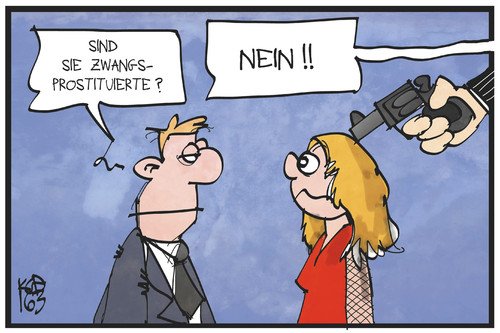
Basics of the tax situation
In the DACH region, sex workers are predominantly self-employed, as salaried employment is rare. This leads to specific tax obligations that are similar to those of other self-employed persons, but are complicated by cash income and stigmatization. Sex work is treated as a legitimate activity for tax purposes, but is subject to strict registration and documentation requirements.
- Tax regulations in the DACH region
Germany: Income tax, VAT and Düsseldorf procedure
- Registration: Sex workers must register with an authority in accordance with the Prostitutes Protection Act (ProstSchG), which forwards the data to the tax office. A business registration is not necessary, as sex work is not a trade within the meaning of the trade regulations.
- Income tax: Income is deemed to be income from business operations and is subject to income tax. The basic tax-free allowance in 2025 is approx. 11,604 euros (tax-free). The tax rate is progressive: approx. 14-42% depending on income (42% from approx. 62,000 euros/year).
- VAT: VAT liability from exceeding the small business threshold (22,000 euros turnover/year, expected 24,500 euros in the following year). Standard rate: 19%, reduced rate of 7% for certain services.
- Trade tax: Income is subject to trade tax, with an allowance of 24,500 euros/year.
- Düsseldorfer Verfahren: In some federal states (e.g. NRW), brothel operators can pay a daily flat rate (5-30 euros) per sex worker to the tax office, which is offset against the tax liability. This does not exempt them from filing tax returns and is controversial.
- Bookkeeping: Income must be documented, expenses (e.g. rent, condoms, advertising) are deductible but difficult to prove. A cash book is mandatory.
- Estimation: Missing records lead to tax office estimates (e.g. 3-5 customers/day at 50-130 euros each, 11-22 working days/month), which can result in high additional claims.
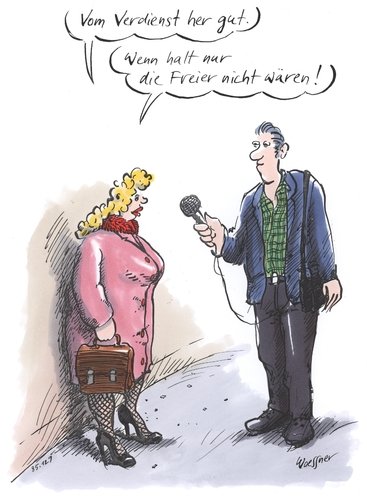
Austria: Self-employment and value added tax
- Registration: Sex workers are considered "new self-employed persons" and must register with the tax office in order to obtain a tax number. In Vienna, official registration is required, often with a tax office link.
- Income tax: Income is subject to income tax, with a basic tax-free allowance of approx. 11,693 euros (2025). Tax rates: 0% up to 11,693 euros, up to 55% from 1 million euros/year.
- VAT: Mandatory if you exceed the small business threshold (35,000 euros net turnover/year). Standard rate: 20%, reduced rate of 13% for services such as erotic massages.
- Deductible expenses: Advertising costs, rent, transportation and materials (e.g. condoms) are deductible, but require proof.
- Specifics: Since 2014, case-by-case assessment has applied instead of flat-rate taxes. Sex workers in salaried employment may be liable to pay income tax without benefits under employment law.
Switzerland: Flexibility with cantonal differences
- Registration: Sex workers must register as self-employed with the tax office and apply for a tax number. In cantons such as Zurich or Geneva, there are registration requirements with the police or trade authorities.
- Income tax: Income is subject to income tax, with rates varying from canton to canton. Federal tax: 0 % up to approx. 14,800 CHF, up to 40 % from 895,900 CHF. Cantonal rates (e.g. Zurich: 13-40%). Basic tax-free allowance: approx. CHF 5,000-10,000.
- VAT: Mandatory from CHF 100,000 turnover/year (rate: 7.7%, reduced rate 2.5%). Small business regulations are possible.
- Deductible expenses: Working materials, rent, advertising and transportation costs are deductible, require proof.
- Social insurance: Contributions to AHV/IV (approx. 5-10% of income) are compulsory.
- Practical tips for sex workers
- Tax office registration: Register early to obtain a tax number.
- Keep a cash book: document income and expenditure (e.g. rent, condoms) precisely.
- Hire a tax advisor: A specialized advisor maximizes deductible expenses and avoids estimates.
- Planning advance payments: Consider quarterly advance payments and collect receipts.
- Check small business regulation: Use VAT exemption for low turnover.
- Contact advice centers: Organizations such as BesD, LEFÖ or ProCoRe offer support.
- Conclusion: Mastering tax obligations
The tax situation for sex workers in the DACH region requires careful planning. Germany demands income tax and VAT, with the controversial Düsseldorf procedure. Austria relies on case-by-case assessment and VAT, while Switzerland offers cantonal flexibility. Challenges such as cash income and stigmatization can be overcome through accounting and counselling. Sex workers should act early to ensure financial security.
Recommendation: Register with the tax office, keep a cash book and use advice centers or tax consultants to avoid additional claims.
Note: Information is based on current regulations (as at 2025). Tax rates and allowances may change. Consult a tax advisor.
Links to further information:
- Intimcity.at - Erotic platform with information on sex work.
- Intimcity Blog - Current articles on sex work and legal issues.
- Berufsverband Sexarbeit (BesD) - Support and advice for sex workers in Germany.
- LEFÖ - Counseling for Migrant Women - Counseling center for sex workers in Austria.
- ProCoRe Switzerland - Counseling for sex workers in Switzerland.
- Prostitute Protection Act Germany - Legal basis for sex work in Germany.
- Prostitution in Austria - Vienna City Administration - Information on registration in Vienna.
- Prostitution Switzerland Wikipedia - Data on sex work in Switzerland.
- Finanzamt Deutschland - General information on tax obligations.
- Austrian Federal Economic Chamber (WKO) - Support for the self-employed in Austria.
- Swiss Federal Tax Administration - Information on taxes in Switzerland.